


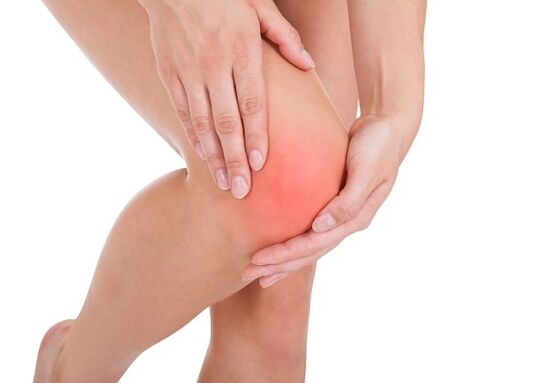
Pain in the knee joint is one of the most common unpleasant sensations that every person experiences at least once.The development of diseases that can cause pain is due to the fact that the human knee consists of many structures and all of them are exposed to great loads every day.Damage can affect one of the ligaments or tendons or special fluid-filled sacs, as well as cartilage tissue.This symptom is not only related to the knee, but can also be a signal of general diseases of the body or systems.
It is also necessary to distinguish during which movements the pain occurs, for example, pain in the knee during bending is characteristic of people with an active lifestyle and often indicates a violation of the structure of the joints and bones.Such spasms appear mainly in the later stages of the disease, when surgical treatment is inevitable.Knees often hurt and crack when squatting, which may indicate wear and tear of the cartilage tissue (mainly observed in athletes due to constant running).Pain inside occurs due to various pathologies of the joint or the formation of neoplasms.The appearance of pain after childbirth is due to the fact that the female body undergoes many changes during pregnancy, so some diseases may develop.
It is important to determine why the pain in the knee joint is expressed, because some diseases can be treated only with the help of surgical intervention, and for some it is enough to use traditional medicine.
Etiology
As mentioned above, there are many reasons for knee pain, and they are not always directly related to injuries, diseases and caries of the knee joint.The first group of factors consists of disorders that directly affect the knee joint, including:
- gonarthrosis is a disease that mostly affects people over the age of forty.The pathology usually affects both knees.The main symptom is pain and cramping when lying down and squatting.Spasms are sharp and sharp.The intensity level decreases while sleeping;
- blood entering the joint cavity;
- Meniscus damage can occur at any age, regardless of gender.Often only one knee is affected.This disease is characterized by severe creaking and pain in the knee when bending or running.In addition, a person loses the ability to move because he feels excruciating pain at the slightest movement of his leg;
- arthritis - the disorder develops very quickly, the inflammatory process spreads to the knee joints of both legs.It is better to start treatment as early as possible, because the disease spreads to other joints;
- violation of the integrity of the ligaments due to a fracture, in most cases the internal ligament is susceptible to it, less common in the lateral ligament.In this case, swelling and restriction of motor functions are observed;
- various inflammations of the tendons - their appearance has many causes, for example, the effects of infectious diseases or bacteria, injuries or bruises, allergies to drugs or abnormalities in the structure of the body.With such disorders, pain in the knee is expressed internally;
- displacement or dislocation of the kneecap - occurs very rarely and mainly in children or athletes, after intensive training or running;
- inflammatory process in the joint capsule.If the treatment is not carried out in time, complications may arise that should be treated only with medical intervention;
- pathological processes in the synovial membrane covering the joint;
- the appearance of a cyst on the inside of the knee joint causes pain behind the knee;
- violation of the integrity of the adipose tissue surrounding the joint.Externally, it manifests itself in the form of swelling of the injured knee;
- osteoarthritis, in which cartilage tissue is thinned;
- various infectious diseases, their progress can cause arthritis.Knee pain occurs during walking, as well as after squats;
- bone tuberculosis;
- pathologies of the spine cause a feeling of pain in the knee while walking;
- Metabolic disorders or salt deposits in the knee often cause knee pain when squatting.
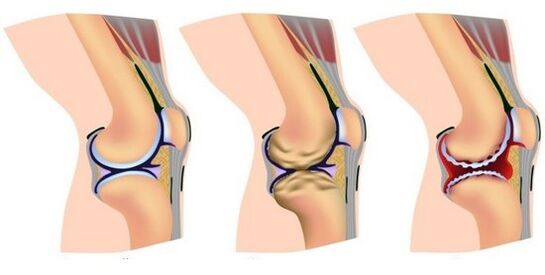
The second group of causes consists of other effects that cause pain in the knee joint:
- excessively high body weight;
- external injuries or bruises of the knee joint;
- working conditions that require a person to be on his feet for several hours at a time;
- intense physical activity - therefore, this disorder is most often observed in professional athletes, for example, after jogging;
- incorrect posture during work;
- wearing uncomfortable high heels.
There are several reasons why a woman's knees hurt during pregnancy:
- increase in body weight (in some cases up to twenty kilograms);
- lack of calcium and other minerals in the body;
- the production of a special hormone that softens the ligament tissue.
After childbirth, all unpleasant sensations should pass by themselves, but if this does not happen, you should consult a doctor, because this may be a sign of the diseases described above.After giving birth, a woman may have pain in her knees when squatting, standing and straightening.This is due to the following reasons:
- intense muscle work during childbirth;
- an involuntary sudden movement during the birth of a baby can cause dislocation;
- if a woman has various diseases of the musculoskeletal system before childbirth;
- When breastfeeding, fluid accumulates in the woman's body, which has a harmful effect on the joints, so pain is felt when standing and straightening the knees.
Symptoms
In addition to the described symptoms - pain of varying intensity and crunching when squatting, this manifestation has additional symptoms characteristic of the disease, which causes damage to the knee during walking or other leg movements:
- sleep disorders;
- increased body temperature;
- decreased or complete lack of appetite;
- stiffness of movements;
- increased pain when walking.There is a noticeable improvement in the sitting or lying position;
- noticeable swelling of the injured knee - can be observed from the inside;
- inability to shift weight on the affected limb;
- knee cap deformity;
- skin discoloration on the knee;
- temperature.
When the first symptoms appear, you should immediately contact a medical institution for diagnosis and effective treatment.
Diagnostics
Since many disorders are caused by knee pain during walking, running, squatting, and standing up, the diagnosis should include:
- detailed questioning of the patient about the appearance of the first symptoms that cause pain, the intensity of pain, the location of its appearance (external or internal), possible causes (for example, walking, running or after childbirth);
- palpation of the knee by the attending physician to find a more complete picture of the localization of pain, as well as to determine swelling;
- blood analysis of the patient for general and biochemical studies;
- x-ray - any pathology in the knee structure will be clearly visible;
- fluid collection using a puncture - performed if the attending physician suspects bone tuberculosis;
- puncture of fluid from the knee joint;
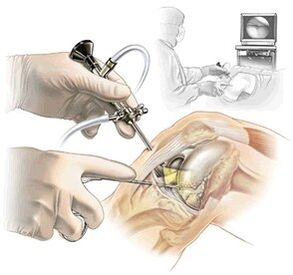
- arthroscopy - performed in cases of damage to the meniscus, which causes pain in the knee.This method is performed not only for diagnosis, but also during treatment;
- measuring the density of bone tissue;
- knee ultrasound;
- Patient examinations using MRI and CT.
Treatment
There is no one way to cure all diseases and disorders.The treatment method for each patient is determined individually and depends on the cause and degree of intensity of the spasms, if the knee hurts while walking, after running, squatting or standing up.Treatment methods prescribed to all patients, including women after childbirth:
- reduce the load on the lower extremities so that the slightest symptoms do not appear;
- applying a fixation bandage to the injured knee;
- warming the knee with heating ointments or compresses.Use cold compresses as prescribed by the doctor, but not more than fifteen minutes a day;
- anti-inflammatory drugs.
If necessary, treatment is carried out with surgical intervention.
In addition, there are folk remedies that can reduce symptoms, but they can be used only after consulting a doctor.Such pain treatments include:
- iodine network;
- a compress from your own urine;
- mixture of raw potatoes with kerosene;
- lotions made from apple cider vinegar mixed with egg yolks;
- ointment made from crushed potatoes with horseradish;
- onion compress, for this you need to divide it in half and apply half to the outer and inner sides of the knee;
- cologne and dandelion solution;
- tinctures of elecampane root and alcohol;
- a compress made of black berries, chamomile and pine;
- calendula lotion;
- a mixture of mustard and honey.
Folk remedies are not recommended to be used by women during pregnancy and after childbirth, when the baby is breastfed.
Prevention
To prevent knee pain when walking, running, or squatting, you should:
- to follow a healthy lifestyle;
- always watch your posture;
- maintain normal body weight;
- warm up muscles before exercise to prevent knee spasms after jogging and exercise;
- wear only comfortable shoes;
- timely treat all diseases that can cause this disorder;
- undergo a preventive examination at the clinic several times a year;
- to do gymnastics if a person's lifestyle or working conditions are standing or sitting;
- avoid hypothermia;
- Consult a doctor at the first symptoms, especially after childbirth or running.